6 B2B Website Platforms That Fit Manufacturing Teams
Compare 6 B2B website platforms for manufacturers, from WordPress to HubSpot, with pros, trade-offs, and fit.

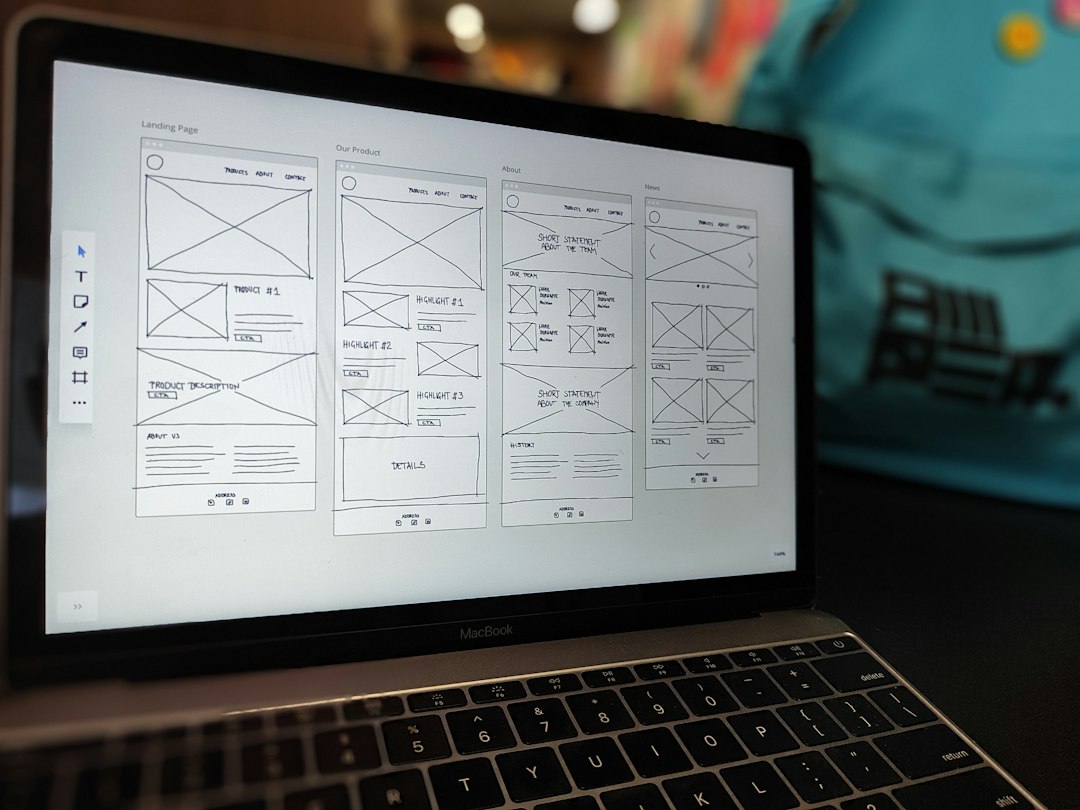
B2B website platforms are not a background technical choice for a manufacturing business. They decide how quickly a buyer can pull up a spec sheet on a phone, how painless it is for your team to publish product updates, and whether your leads arrive in your CRM with the detail sales actually needs.
If you are planning a rebuild, this decision either clears the runway for the buying committee or adds friction you will feel every week. Mobile use is now normal in B2B purchasing, including at work, which is why performance and responsive layouts are not “nice to have”. Google also bakes speed and usability into its page experience signals, which is another reason platform and build quality show up in commercial results, not just in developer conversations.
This guide walks you through six common platform choices manufacturers end up comparing. You will get the practical upsides, the trade-offs people only mention after launch, and a straightforward way to choose based on how you sell.

Why B2B website platforms matter in manufacturing
Your website is doing a different job than a consumer brand site. Manufacturing buyers arrive with technical questions, internal stakeholders, and a need for proof. They are looking for the thing that helps them move the decision forward, not a clever homepage.
That means your content needs structure. Product families and variants. Certifications. Spec sheets. Application pages. Industries served. Case studies with enough detail to be believable. If the platform fights you on any of that, your team starts cutting corners. That is when product pages go stale, PDFs become a dumping ground, and sales gets stuck re-answering the same questions on calls.
Then there is the unglamorous part: integrations. If your website cannot pass clean data into HubSpot or Salesforce, or it makes ERP, PIM, and quoting workflows feel like a side project, you end up with a website that looks fine but leaks qualified inquiries. Google’s guidance on page experience is a useful reminder that the basics still matter: speed, stability, and usability affect how real people experience your site.

What to check before you pick a platform
Before you compare logos and price tags, get specific about what your next website must do in the next 12 to 24 months. Not the long wishlist. The stuff that will actually ship, get used, and affect revenue.
- Conversion goals: RFQ, sample request, distributor inquiry, book a call, download a spec sheet, or account login.
- Content model: how many products, how many attributes per product, how often specs change, and who will maintain it.
- Integrations: CRM, ERP, PIM, marketing automation, recruitment tools, dealer portals.
- Governance: approvals, role-based access, multi-site, and multi-language requirements.
- Performance and SEO: Core Web Vitals, template cleanliness, redirect control, and migration planning.
If you are switching platforms as part of a redesign, treat SEO migration like a real workstream. Redirects, metadata, internal links, and indexing checks are the difference between a smooth transition and watching years of search visibility fall off a cliff. Google’s own site move documentation is blunt about what matters: planning, mapping, and validating the move.
Quick comparison: 6 B2B website platforms for manufacturing teams
| Platform | Best for | Main strength | Main trade-off |
|---|---|---|---|
| WordPress | Most B2B manufacturers | Flexible build, strong SEO control, broad integrations | Quality varies massively, you need good build standards and ongoing maintenance |
| HubSpot Content Hub | Marketing-led teams already running on HubSpot | CRM, forms, automation, and reporting in one place | Licensing and lock-in can bite as you scale |
| Webflow | Design-forward marketing sites with frequent edits | Fast visual editing and solid performance | Complex catalogs and deep integrations can get awkward |
| Drupal | Enterprise manufacturers with governance needs | Permissions, structure, compliance, and complexity at scale | Higher build cost and ongoing developer dependency |
| Magento (Adobe Commerce) | B2B e-commerce and self-serve ordering | Account pricing, quotes, and large catalogs | Heavier implementation and maintenance effort |
| Craft CMS | Structured content without the WordPress or Drupal extremes | Content modeling and a clean editorial experience | Smaller pool of specialists for support and handover |
1) WordPress: the most adaptable option
If you asked us to pick one platform that fits the widest range of B2B manufacturing sites, it is WordPress. Not because it is trendy, but because it is practical. You can build a proper product library, run campaign landing pages, publish technical content, and keep control of SEO without wrestling the system.
We build on WordPress because you can own it long-term. You are not boxed into one vendor’s templates or pricing structure, and you are not forced to rebuild when your marketing changes direction. When it is set up well, your team can handle day-to-day updates without needing a developer for every change.
The catch is build quality. A WordPress site thrown together with too many plugins and no performance discipline becomes slow and brittle. A well-built WordPress site becomes the opposite: stable, extendable, and calm to run.
2) HubSpot Content Hub: when your website and CRM need to behave like one system
HubSpot Content Hub makes sense when your sales and marketing operation already lives inside HubSpot. Forms, workflows, email, lists, attribution, and CRM data sit close together, which reduces the “why is this lead missing half the details” problem.
If your growth plan leans heavily on automation, gated assets, and tight handoffs to sales, that all-in-one setup can be a relief. HubSpot’s own overview of Content Hub gives a clear picture of what you are buying: CMS, personalization, and reporting designed to sit beside the CRM.
The trade-off is long-term flexibility. As your database grows and your needs get more specific, licensing costs and platform constraints can become part of the conversation. It is not a deal-breaker. It is just something to decide with your eyes open.
3) Webflow: fast, design-led, and great for marketing pages (until things get complex)
Webflow is appealing when your site is mostly about marketing, positioning, and lead generation. Teams like it because you can move quickly. Landing pages for a trade show. A new industry page. A refreshed case study layout. You can get a lot done without lining up developer time for every small edit.
Where it tends to wobble is at the complex end of manufacturing. If you have a big catalog with lots of attributes, or you need deeper integrations and custom workflows, the build can start to feel like you are forcing a marketing-first platform to act like a product system.
If your priority is speed to publish and your integrations are light, Webflow stays in the running. If your site is tied tightly to operational systems, you will want to think harder.
4) Drupal: when governance, permissions, and scale are non-negotiable
Drupal is a serious option for enterprise manufacturers with complex requirements. Multi-language. Multiple divisions. Large libraries of technical documentation. Strict permissions. Approval workflows. Compliance-driven structure. Drupal is built for that world.
The trade-off is that it usually demands specialist development support, both for the build and for ongoing evolution. If your organization has the scale and internal processes to match, it can be the right platform. If you just need a strong marketing site with structured product content, it can be heavier than you need.
5) Magento (Adobe Commerce): for B2B buying, not just B2B browsing
If your website is expected to handle ordering, repeat purchases, account pricing, and quote workflows, Magento often shows up on the shortlist. It is built for complex e-commerce, including B2B patterns that manufacturers care about.
What you get is power. What you take on is implementation weight. You will need proper technical ownership, solid testing, and ongoing support. Adobe’s overview of Adobe Commerce gives you a sense of the feature depth, and also hints at why this is not usually a lightweight project.
If you are serious about moving repeat business online to reduce manual order processing, the investment can be worth it. If your site’s job is mainly lead generation and qualification, it may be too much platform.
6) Craft CMS: structured content, clean editing, and fewer sharp edges
Craft CMS is a quieter choice, but it is a good one when you care about structured content and an editorial experience that does not feel like a compromise. It can be a strong fit for manufacturers with content that needs to be organized properly, like technical articles, application pages, case studies, and product content that branches by industry.
The main downside is talent pool. There are fewer agencies and developers who specialize in Craft compared to WordPress or Drupal. That can matter if you want to switch partners later or hire in-house.
How to choose without overthinking it
If you want an honest shortcut, start with how a prospect actually uses your site. In manufacturing, most buyers do not begin on your homepage. They land on a product page, an application page, or a PDF. Then they fan out, looking for confirmation: specs, certifications, proof, and a clear next step.
Pick the platform that supports that behavior without drama.
- Choose WordPress if you want flexibility, SEO control, and long-term ownership, as long as you commit to build quality and maintenance.
- Choose HubSpot Content Hub if your marketing and sales workflow depends on HubSpot automation and CRM visibility.
- Choose Webflow if your site is marketing-led and you value speed of publishing over deep systems integration.
- Choose Drupal if you genuinely need enterprise governance, complex permissions, and structured content at scale.
- Choose Magento if online ordering and account-based purchasing is a core channel, not a future phase.
- Choose Craft if you want structured content and a clean CMS, and you have reliable specialist support.
Then ask two practical questions that cut through the noise.
- Can your team maintain this platform without heroics?
- Can it connect cleanly to the systems that run revenue, like your CRM and ERP?
Platform is not strategy: what you should lock down before build starts
The platform matters, but it will not rescue a weak plan. What moves the needle on manufacturing sites is usually the unsexy stuff: information architecture, content structure, and forms that collect the right details for a sales follow-up.
This is how Revo works: strategy first, structure second, design third. You map the buyer journey. You decide what content belongs at Awareness, Consideration, and Decision. Then you design pages and modules that make the next step obvious, whether that is an RFQ, a sample request, or a call.
If you are assessing agencies, ask how they handle content modeling and SEO migration, not just how they present design concepts. A good-looking website that no one can maintain is not a win. It is a future problem with a fresh coat of paint.
Where Revo fits (and where it does not)
Revo is a UK-founded B2B web design agency with offices in Denver, Colorado and London. We build strategy-led, conversion-focused WordPress websites on fixed scope, published pricing, and a defined launch date, then support them with care plans and SEO programs.
If you want to see how that looks in practice, start with Revo’s B2B website design and development approach. If you need a site live quickly with the structure agreed up front, Website in a Week delivers a new site in 7 days for $3,500 fixed.
If you are still weighing up whether you need a redesign or a rethink, 10 signs your website needs a redesign will help you avoid rebuilding for the wrong reason. If you want a direct recommendation on platform and next steps, book a call with Revo.
FAQ: website platforms for manufacturing companies
What are the best B2B website platforms for manufacturers?
Most manufacturers do well on WordPress because it balances flexibility, SEO control, and integrations. HubSpot Content Hub is a strong fit if your team already runs on HubSpot. Drupal tends to suit enterprise governance. Magento suits B2B ordering. Webflow suits marketing-led sites. Craft suits structured content with a smaller ecosystem.
Is WordPress secure enough for a manufacturing website?
Yes, if it is built and maintained properly. The risk is rarely WordPress itself. The risk is weak hosting, outdated plugins, sloppy access control, and no update routine. A care plan that covers updates, monitoring, and backups turns security into a routine task.
Should you pick HubSpot Content Hub if you already use HubSpot CRM?
Often, yes. The integration between website behavior, forms, automation, and CRM visibility can reduce reporting gaps and lead handoff issues. The trade-off is committing to HubSpot’s ecosystem and accepting that licensing costs can rise as you scale.
Which platform is best for large product catalogs?
If you are marketing a large catalog with lots of attributes, WordPress can work well with a proper content model, and Drupal can be strong at enterprise scale. If you are selling products online with account pricing and quote workflows, Magento is often the better fit.
How do you pick the right B2B website agency for a manufacturing site?
Look for an agency that starts with the buyer journey and site structure, not design comps. Ask how they handle integrations, content modeling, and SEO migration. Also ask for a defined scope and launch date, plus a plan for post-launch support, because manufacturing sites never stand still.
Conclusion
The right B2B website platforms for manufacturing are the ones that match how you sell: long buying cycles, technical evaluation, multiple stakeholders, and systems that need to connect cleanly behind the scenes. WordPress, HubSpot, Webflow, Drupal, Magento, and Craft can all work. The best choice depends on content complexity, integration requirements, and whether your site is a lead engine or a buying channel.
If you want a second set of eyes on your current platform and what it is costing you in speed, SEO, and lead capture, book a call with Revo. We will give you a clear recommendation, including the trade-offs, and a realistic next step.