Best Tools for B2B SEO: 8 Picks for 2026
Best tools for B2B SEO in 2025: 8 B2B SEO tools that help marketing teams research, fix issues, and prove lead impact.


The best tools for B2B SEO are the ones that help you turn serious buyer research into qualified enquiries, not a chart that looks nice in a monthly report.
If you sell B2B, you already know the pattern. The real buyer is busy, the buying committee is cautious, and the sales cycle is rarely quick. SEO still works, but it has to support that reality: fewer clicks, higher intent, better evidence.
Below are eight tools that keep showing up in 2026 for a reason. You can use them to pick the right topics, keep your site technically clean, and connect your content to the actions that matter.
Why the best tools for B2B SEO are not about volume
In B2B, a keyword with 50 searches a month can beat one with 10,000. Not because it is “easier”. Because it smells like a real buying conversation.
Take a query like “ISO 27001 compliance consultant for SaaS”. It is not a browsing term. It is someone trying to solve a specific problem with a specific budget line. Those are the moments you want your site to show up, and the right tools help you spot and serve those moments.
That is also why B2B measurement has to grow up a bit. If you only track rankings and pageviews, you will hit the same wall every quarter: leadership asks what SEO is doing for pipeline, and you are left pointing at “more impressions”.
The 8 best tools for B2B SEO in 2026 (quick comparison)
If you are building your stack from scratch, start with the free Google tools. Then add one paid platform based on your bottleneck. The best setup is the one you will actually open every week.
| Tool | Best for | Where it fits in your programme |
|---|---|---|
| Semrush | All-in-one research, planning, reporting | Your main workspace for keyword and competitor work |
| Ahrefs | Backlink analysis and content gap research | Authority building in competitive categories |
| Google Search Console | Search performance and indexing visibility | Baseline diagnostics and query insights from Google |
| Google Analytics 4 | Conversion tracking and attribution | Proving SEO impact on leads and meaningful actions |
| Screaming Frog SEO Spider | Technical audits and crawl data | Quarterly health checks, migrations, clean-ups |
| Surfer SEO | On-page content optimisation | Execution help for pages that need to rank and convert |
| Moz Pro | Stakeholder-friendly reporting and guidance | Teams that want clarity without a steep learning curve |
| SE Ranking | Core SEO suite at a lower price | SMBs that want the essentials without enterprise cost |
1) Semrush: the all-in-one tool many B2B teams stick with
If you want one paid platform that covers the basics well, Semrush is usually the easiest answer. Keyword research, competitor analysis, content planning, site audits, reporting. You can run a lot of your week-to-week work from one login, which matters when SEO is not your only job.
Where Semrush earns its keep in B2B is in planning and prioritization. You are not publishing for the sake of publishing. You are building a body of content that supports Awareness, Consideration, and Decision pages. Semrush helps you map that out without having ten spreadsheets on the go.
Use it when you need a dependable operating system for your programme, especially if you are reporting to leadership and need your numbers in one place.
2) Ahrefs: backlink intelligence when you are up against bigger brands
In competitive B2B categories, links still matter. Not the old-school version where you chase volume, but the version where you earn relevant mentions that make Google take you seriously.
Ahrefs is strong for link research because it lets you answer practical questions quickly:
- Which pages are competitors getting cited for, and why?
- What sites link to them but not to you?
- Which of your own pages are most “linkable” if you gave them a little polish?
If you are trying to build authority without wasting time on dead-end outreach, Ahrefs gives you a cleaner hit list.
3) Google Search Console: your first stop for B2B SEO troubleshooting
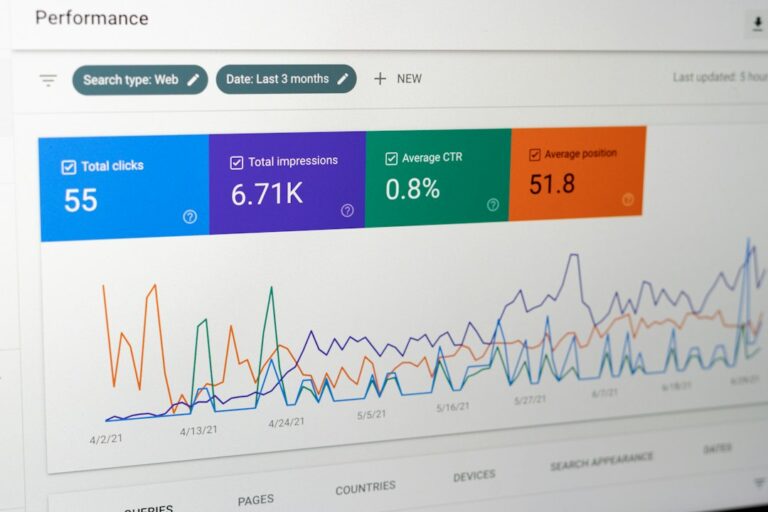
Google Search Console is the tool you open when something feels off. Rankings dip, leads slow down, a new page is not showing up. Search Console tells you what Google is actually doing with your site: what is indexed, what is not, what queries you appear for, and where technical issues are getting in the way.
It is also the best antidote to guesswork. Paid tools estimate. Search Console shows you real impressions and clicks from Google, tied to your own pages.
If you have not checked it in a while, start there. A lot of “SEO problems” turn out to be boring things like indexing, redirects, or pages that never got discovered properly.
4) Google Analytics 4: where you prove the lead impact of B2B SEO
Google Analytics 4 is not built only for SEO, but it is where SEO becomes measurable. The goal is not to celebrate pageviews. It is to track what people do after they land: form submissions, demo requests, brochure downloads, calls, key page paths.
GA4 setup is the difference between useful and useless. If you want a sanity check, Google’s own GA4 events and conversions documentation is the clearest place to start, because it forces you to define what counts as success.
If your sales cycle runs long, you will also want leading indicators, not only last-click conversions. You can map organic landing pages to later commercial intent and build a story that leadership recognises.
5) Screaming Frog SEO Spider: the technical audit tool that keeps you honest
Screaming Frog is what you use when you want the truth about your website, not the tidy version in your CMS. It crawls your site like a search engine and surfaces the issues that quietly blunt performance: broken links, redirect chains, duplicate metadata, orphaned pages, thin pages you never meant to index.
This hits B2B sites especially hard because they tend to grow in layers. You launch with a neat set of service pages. Then you add locations, sectors, case studies, thought leadership, resource hubs. A year later, you have pages competing with each other and internal links that no longer make sense.
If a redesign or replatform is coming, this is the moment to be disciplined. The difference between “we launched” and “we launched and kept our rankings” usually comes down to migration hygiene. Revo’s checklist in Redesign Without Losing SEO: The Complete Migration Checklist lays out what to protect before you touch the design.
6) Surfer SEO: an execution tool for pages that need to pull their weight
Most teams do not fail at SEO because they cannot find keywords. They fail because research does not turn into pages that rank and convert.
Surfer SEO is useful because it meets you at writing time. It gives page-level guidance on structure, topical coverage, and on-page signals so you can ship content that is more likely to compete.
Where it tends to be most valuable in B2B is on pages with commercial intent:
- Service pages
- Comparison pages
- Problem and solution pages that sit in Consideration
- Case studies that need to be discovered, not only admired
Think of it as the layer that helps you finish strong. Semrush or Ahrefs helps you decide what to build. Surfer helps you build it properly.
7) Moz Pro: clearer reporting when you need the whole team to get it
Moz Pro gets recommended a lot because it is approachable. If you are trying to bring SEO into a wider marketing team, usability matters. You want people to log in, understand what they are seeing, and take action.
Moz’s Domain Authority is also widely recognized as a shorthand way to talk about authority growth with stakeholders. It is not the goal, but it can help communication when you need a simple indicator alongside the work you are doing.
8) SE Ranking: a sensible suite if you want capability without enterprise pricing
SE Ranking covers the essentials: rank tracking, keyword research, audits, backlink monitoring, competitor analysis. It often lands at a friendlier monthly cost than the biggest platforms, which makes it a solid option for small to mid-sized B2B teams.
If you are the person who has to report progress upward, the white-label reporting options also help you keep updates consistent month to month.
How to choose the best tools for B2B SEO (based on your bottleneck)
Tool selection gets easier when you start with the constraint you feel every week. Pick the first paid tool that removes that constraint, then add from there.
- You are starting from scratch: Google Search Console and GA4 first. Then choose one paid suite, usually Semrush or Ahrefs.
- Your site feels messy: Screaming Frog, then build a technical backlog you can actually clear.
- You publish but you do not rank: add an optimization layer like Surfer SEO, then tighten internal linking and refresh older content.
- Competitors out-authority you: use Ahrefs to map realistic link opportunities and focus on relevance, not volume.
One more filter that matters in B2B: your buyer journey. You need content for Awareness, Consideration, and Decision, and you need your Decision pages to be fast, clear, and built to convert.
AI answer engines are changing what “visibility” means
More buyers are researching in AI tools as well as Google. Sometimes you get mentioned without a click. Sometimes you disappear even when you have written something useful.
You do not need to panic-buy a new platform for this, but you do need to take content structure seriously. Clear headings, direct answers, and properly organised pages are doing double duty now. They help buyers and they help machines understand you.
Revo digs into this shift in Your Next Customer Might Never See Your Homepage. If your content still assumes everyone enters through your homepage, it is time for a rethink.
What a sensible B2B SEO tools budget looks like in 2026
You do not need an enterprise stack to get value. You do need consistency. A lean setup is usually the free Google tools plus one paid research platform. A fuller setup adds a crawler and a content optimiser, because that is where “we know what to do” turns into “we did it”.
Budget conversations also get easier when you anchor them to revenue. BrightEdge data cited in Erlin’s breakdown of the best SEO tools for B2B notes that organic search drives 44.6% of B2B revenue. If organic is material for your pipeline, the bigger cost is not software. It is what happens when the work stalls for six months because nobody has time to turn insight into action.
FAQ: B2B SEO tools and stack decisions
What are the best tools for B2B SEO if you can only pay for one?
Start with Google Search Console and GA4, because they are free and they tell you what is happening on your site. Then pick one paid suite. Semrush is the common “do most things well” option. If link building and authority are the main battle in your market, Ahrefs can be the better single paid tool.
Which B2B SEO tools help you tie SEO to leads?
GA4 is the foundation, but only if conversion events are configured properly. Pair it with Search Console so you can connect queries and landing pages to actions like demo requests and form fills.
Do you need Screaming Frog if you already have Semrush or SE Ranking?
If your site is more than a handful of pages, yes. Platform audits are helpful, but Screaming Frog gives crawl-level detail that is hard to replicate. It is especially useful before a redesign, replatform, or content clean-up.
How do you pick keywords in B2B when search volume is low?
Prioritise intent and buyer journey stage. Map keywords to Awareness, Consideration, and Decision pages. Look for terms that signal urgency, requirements, comparisons, and implementation details. Low volume is fine if the query matches your ideal buyer.
How do SEO tools for marketing teams fit with your website build?
Tools tell you what to fix and what to build, but your website has to execute: fast load times, clear structure, and conversion-focused pages. If your site is slow, unclear, or hard to edit, your tools will keep reporting the same problems back to you.
Conclusion: tools help, but the weekly habit is what wins
The best tools for B2B SEO make the work easier to repeat: keep your site technically clean, publish Decision-stage content that earns trust, and measure qualified enquiries properly.
If you want a second opinion on what to prioritise first, take Revo’s free B2B website audit. You will get instant conversion feedback and a scored report after a free 15-minute call, so you can walk into your next planning session with a clear shortlist.
Ready to enhance your SEO strategy? Contact our team for tailored recommendations or to discuss bespoke solutions for your B2B SEO needs.